Grade 6 Ontario Worksheets
12 free printable sheets across 4 expectations, each written at up to three levels — Modified for reduced expectations, Standard for the expectation as written, and Challenge to extend beyond it — so one expectation covers the whole class. Every sheet includes a full answer key on the last page.
D1.3
3 worksheetsSelect from among a variety of graphs, including histograms and broken-line graphs, the type of graph best suited to represent various sets of data; display the data in the graphs with proper sources, titles, and labels, and appropriate scales; and justify their choice of graphs
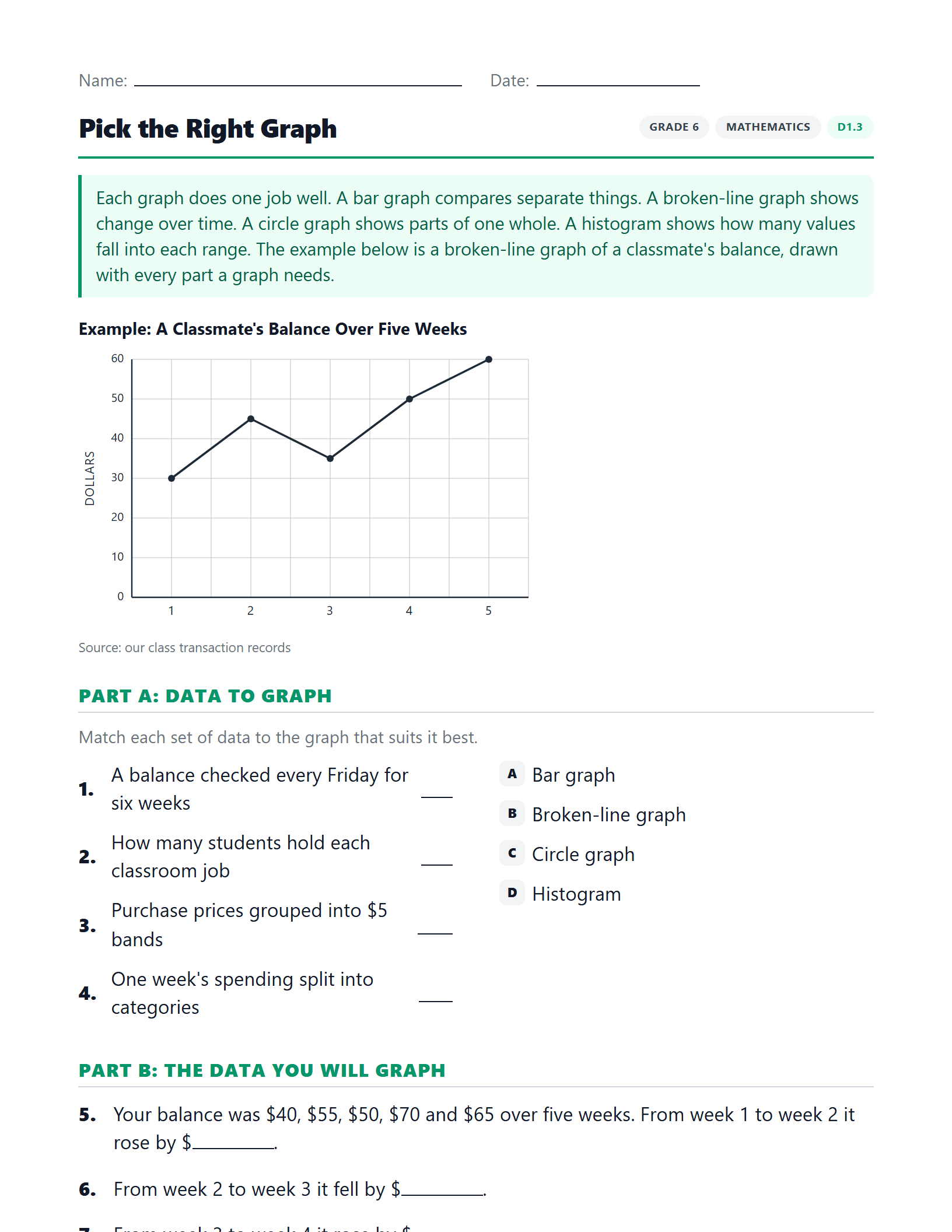
Pick the Right Graph
Match each kind of data to the graph that suits it, read an example broken-line graph, then draw and label a balance line of your own.
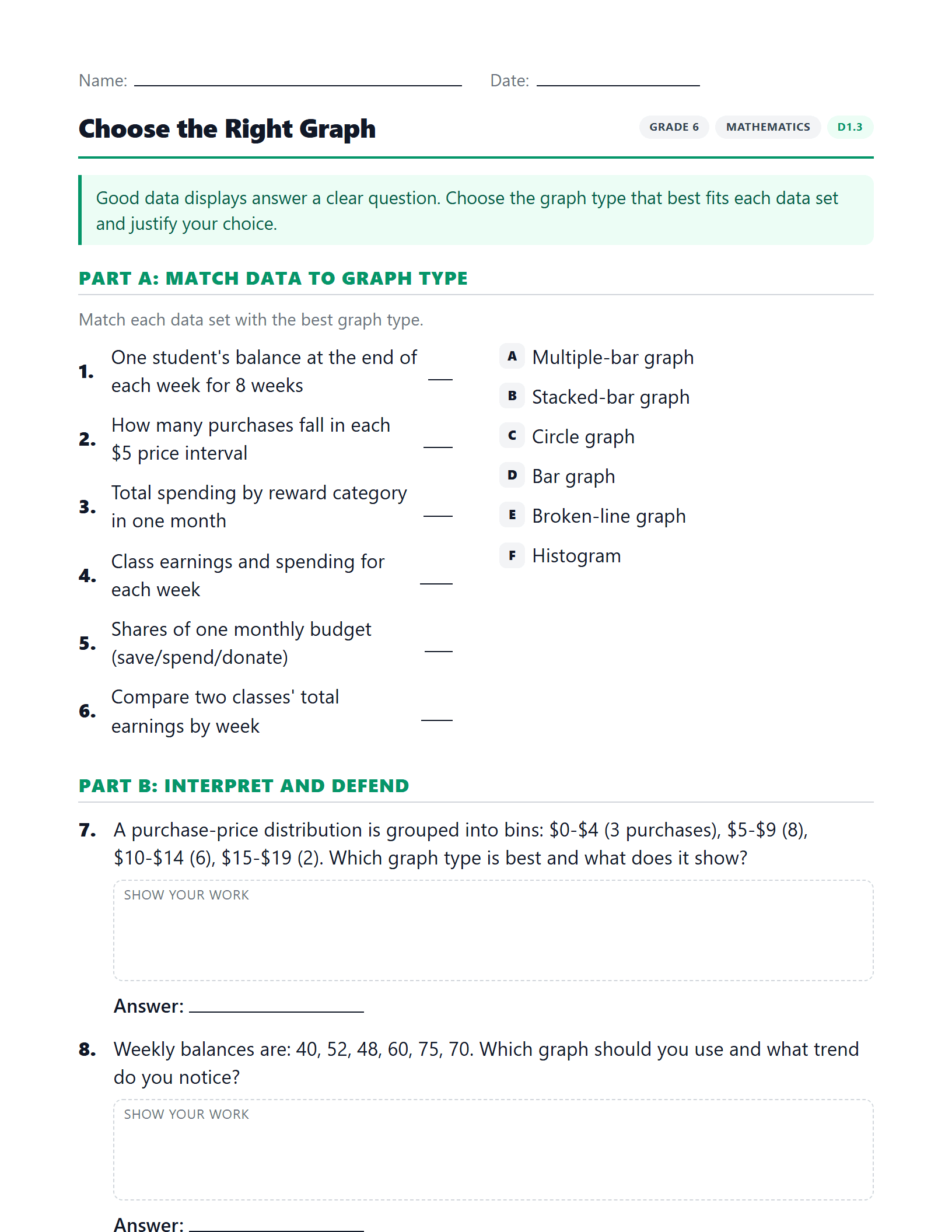
Choose the Right Graph
Choose the graph that fits each data set, defend the choice, and display one in full with a title, labels, scale and source.
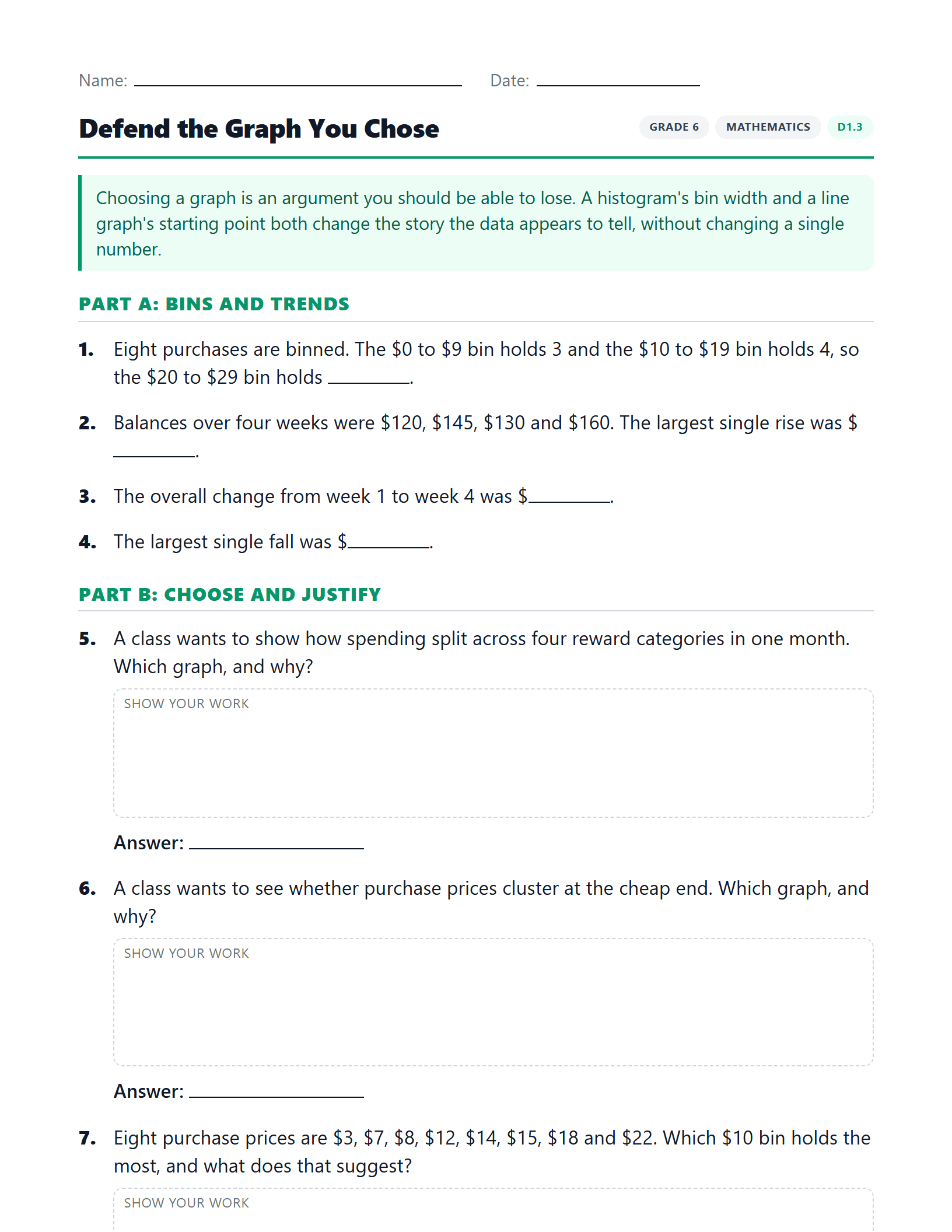
Defend the Graph You Chose
Bin a set of purchase prices, read rises and falls off a balance series, and argue for the bin width you picked.
F1.2
3 worksheetsIdentify different types of financial goals, including earning and saving goals, and outline some key steps in achieving them
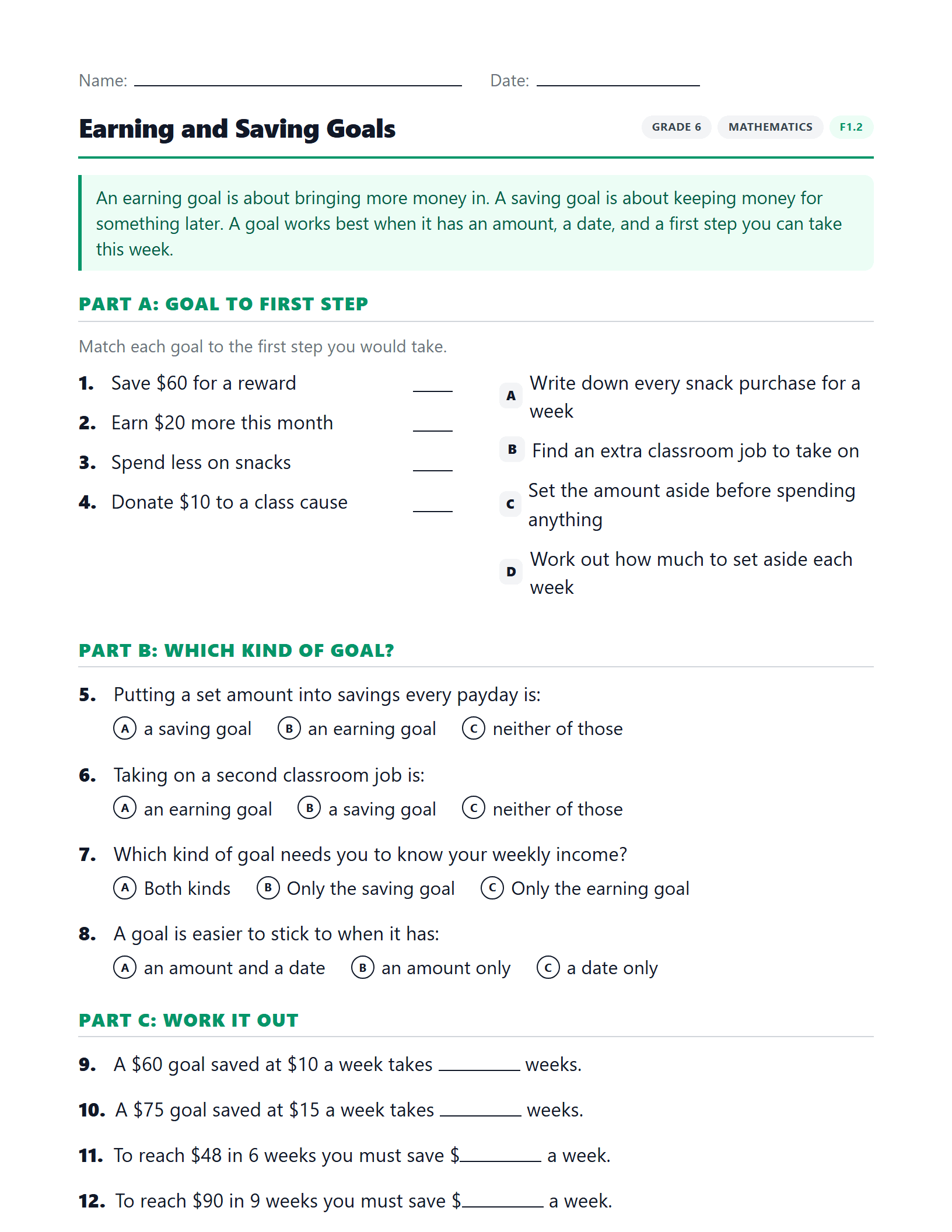
Earning and Saving Goals
Tell an earning goal from a saving goal, match each to its first step, and work out weekly amounts.
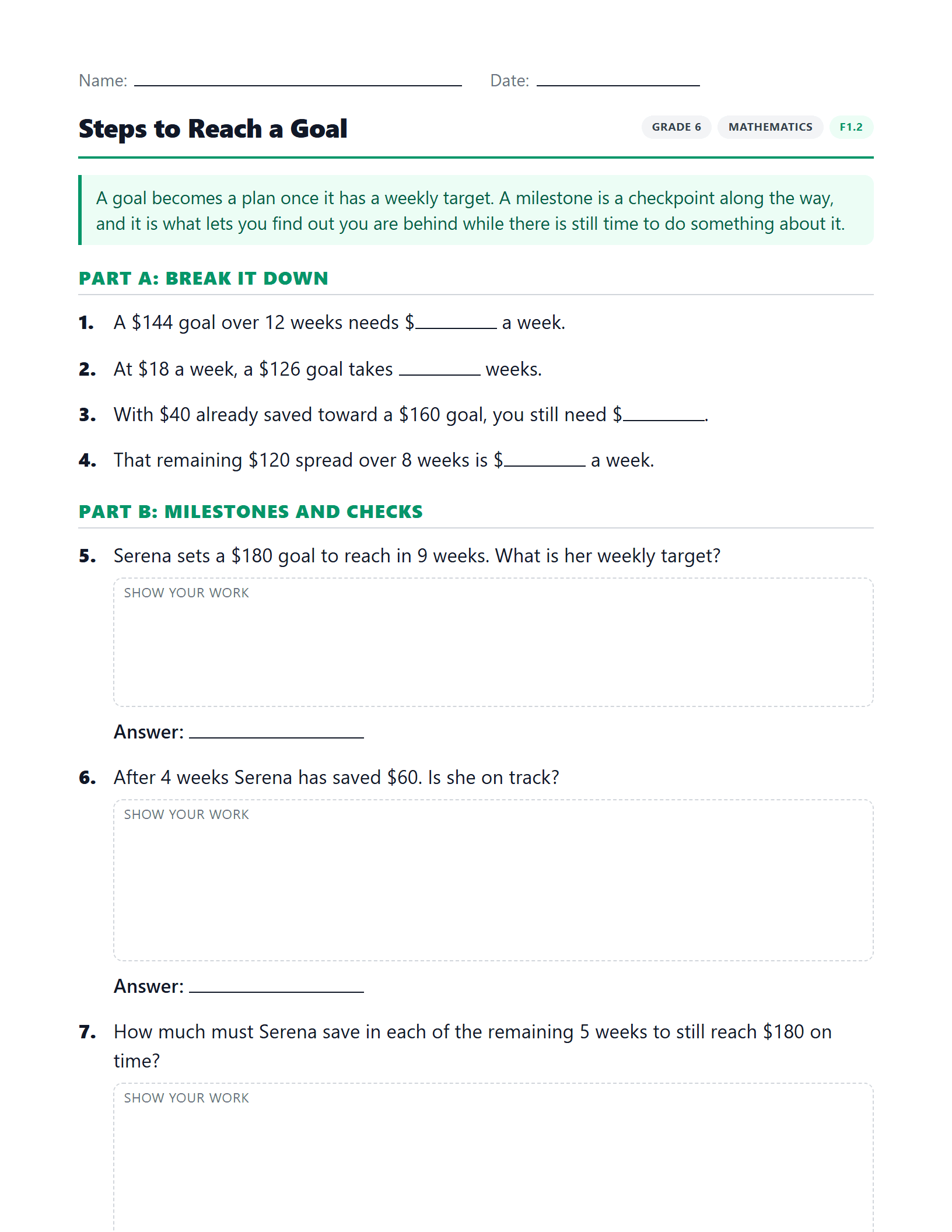
Steps to Reach a Goal
Break a goal into a weekly target and a halfway milestone, then check whether progress is actually on track.
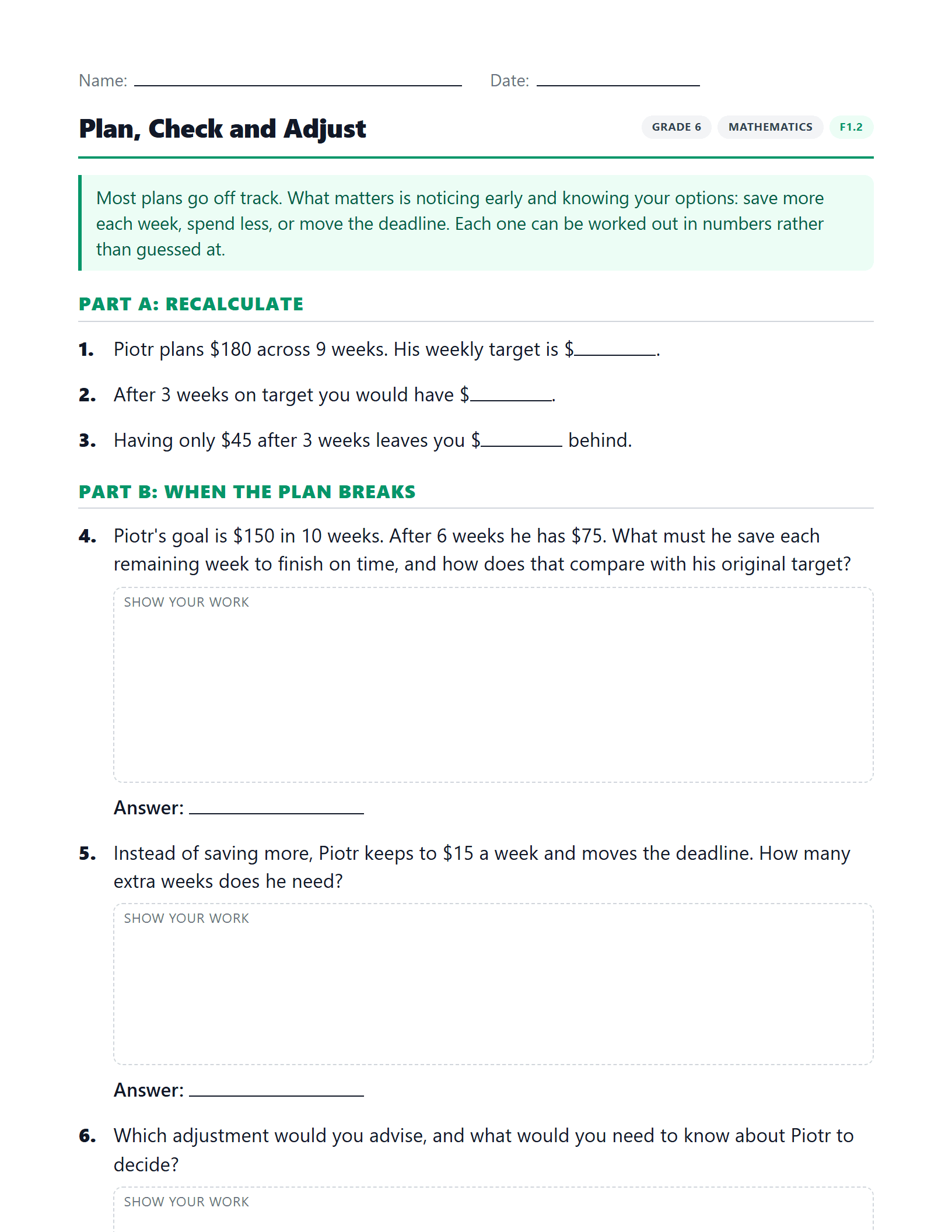
Plan, Check and Adjust
Diagnose a goal that has fallen behind, cost out two different ways to rescue it, and argue for one.
F1.3
3 worksheetsIdentify and describe various factors that may help or interfere with reaching financial goals
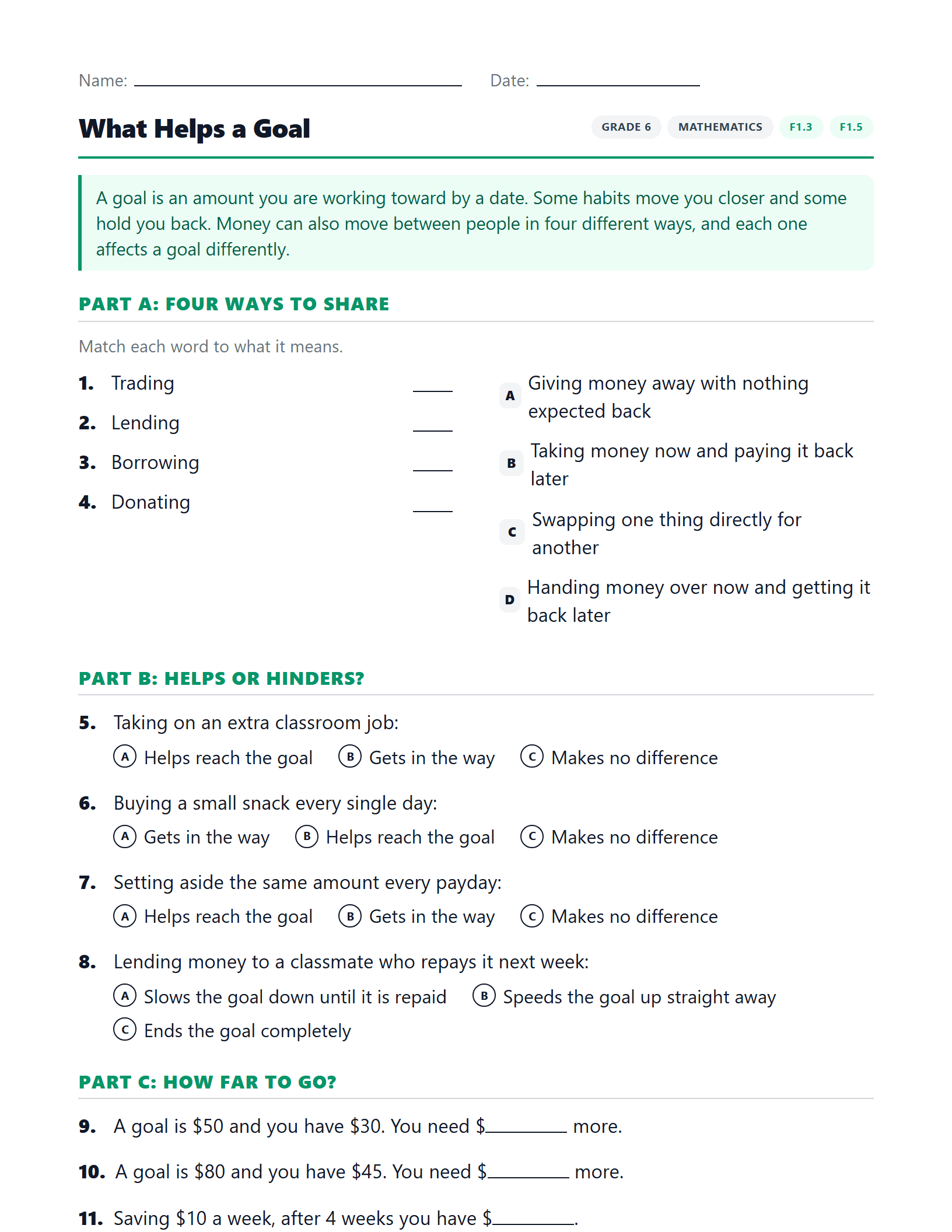
What Helps a Goal
Sort what helps and what hinders a savings goal, learn the four ways money moves between people, and work out how far there is to go.
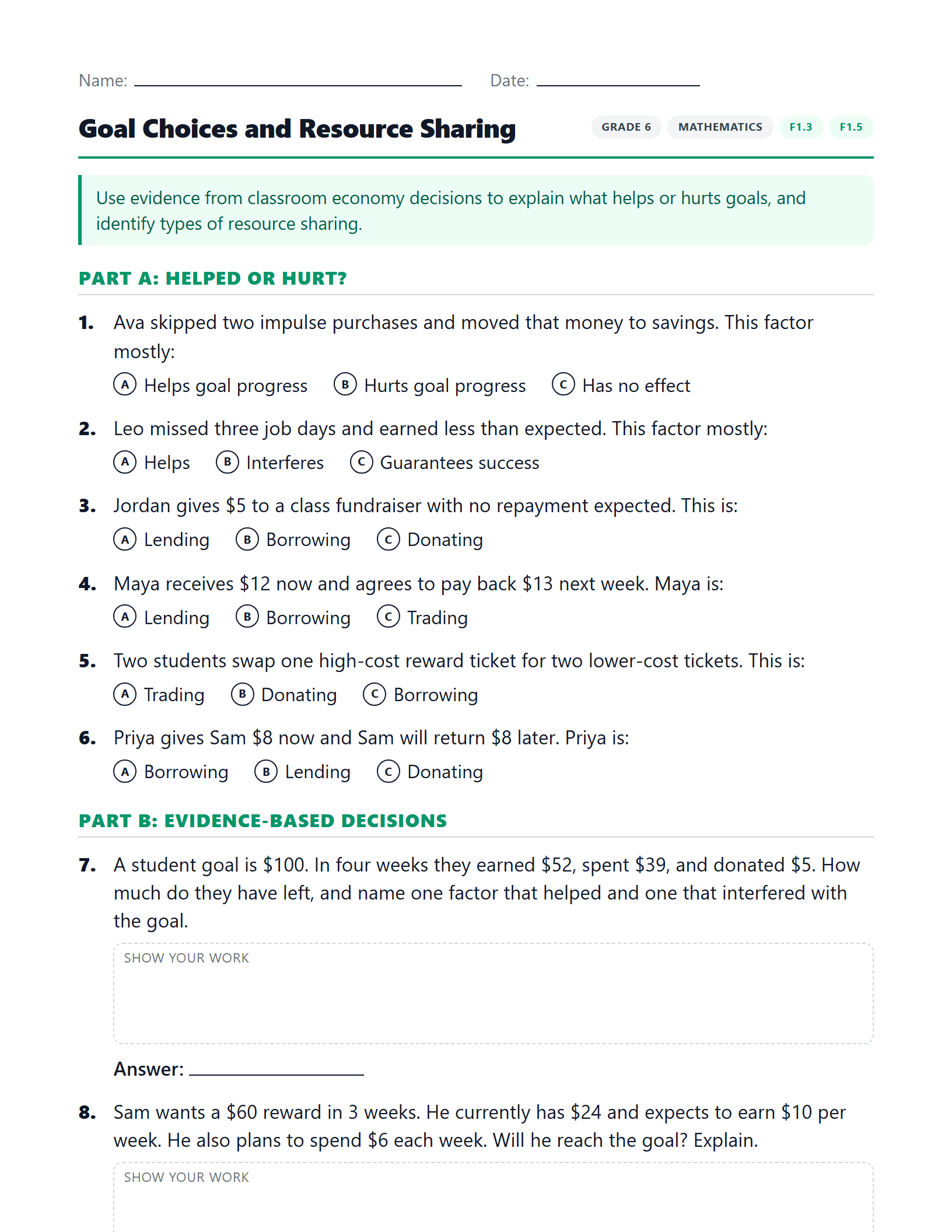
Goal Choices and Resource Sharing
Analyze factors that help or interfere with financial goals and classify scenarios as trading, lending, borrowing, or donating.
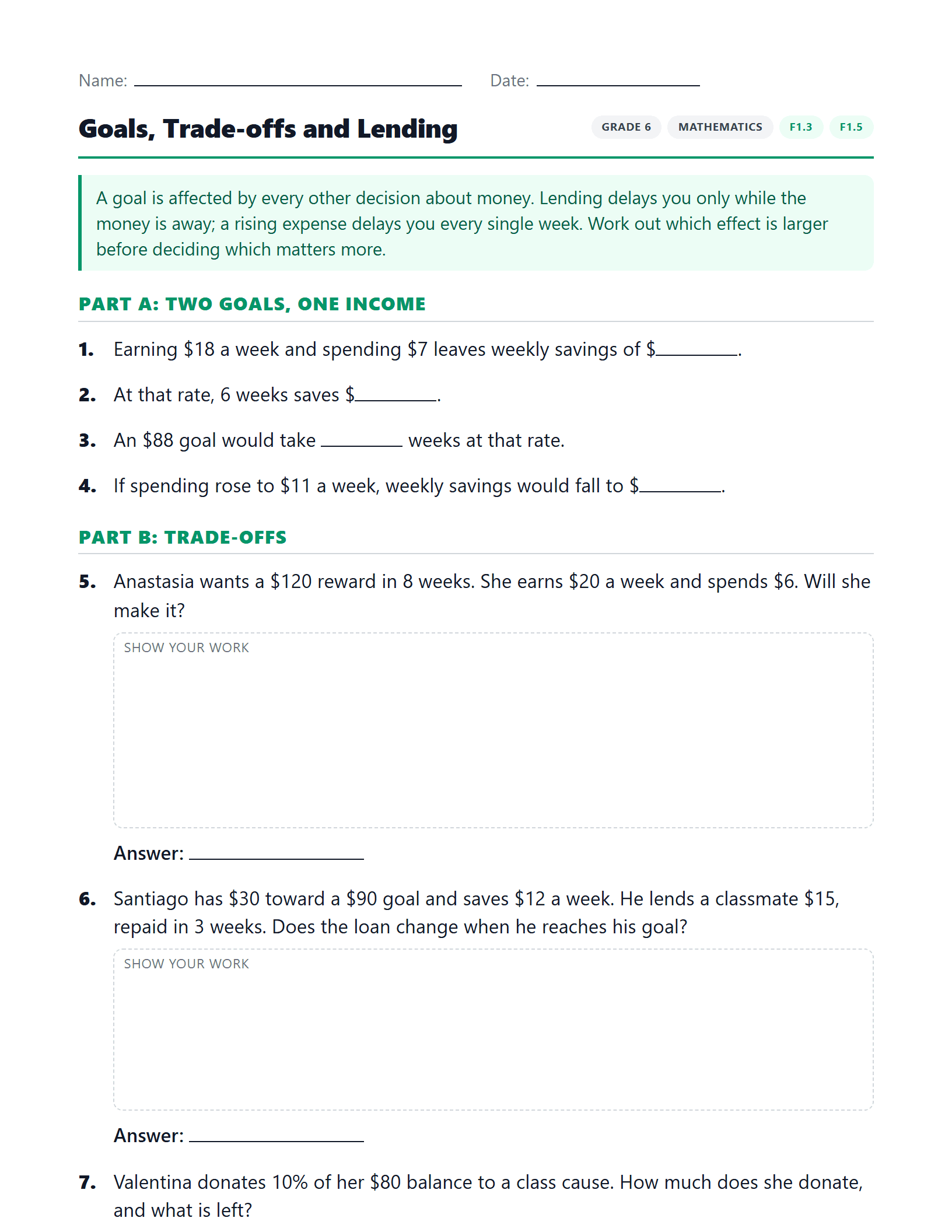
Goals, Trade-offs and Lending
Weigh a rising expense against a goal, work out whether a loan actually delays anything, and judge which way of sharing is fairest.
B2.3
3 worksheetsUse mental math strategies to calculate percents of whole numbers, including 1%, 5%, 10%, 15%, 25%, and 50%, and explain the strategies used
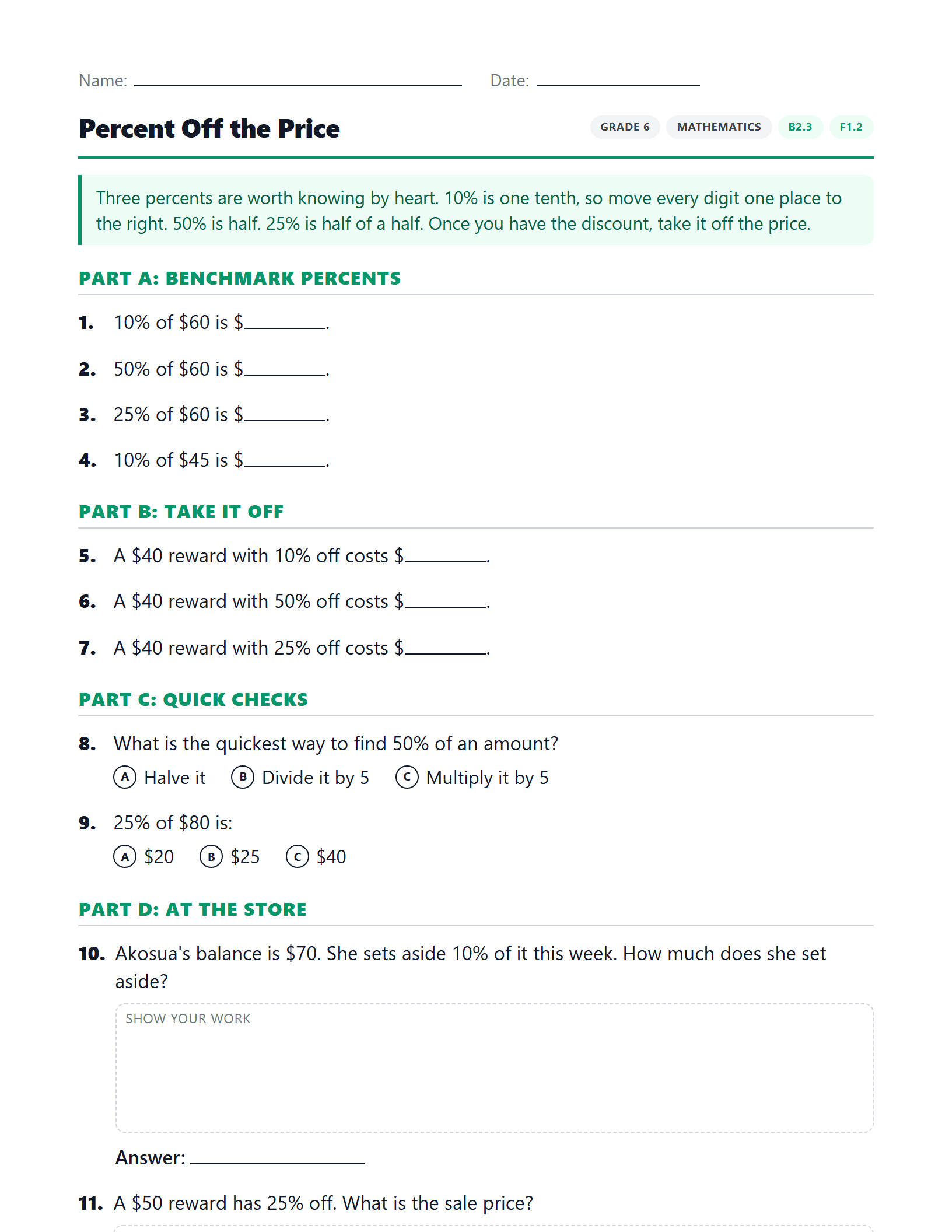
Percent Off the Price
Find 10%, 25% and 50% of a price in your head, then take the discount off.
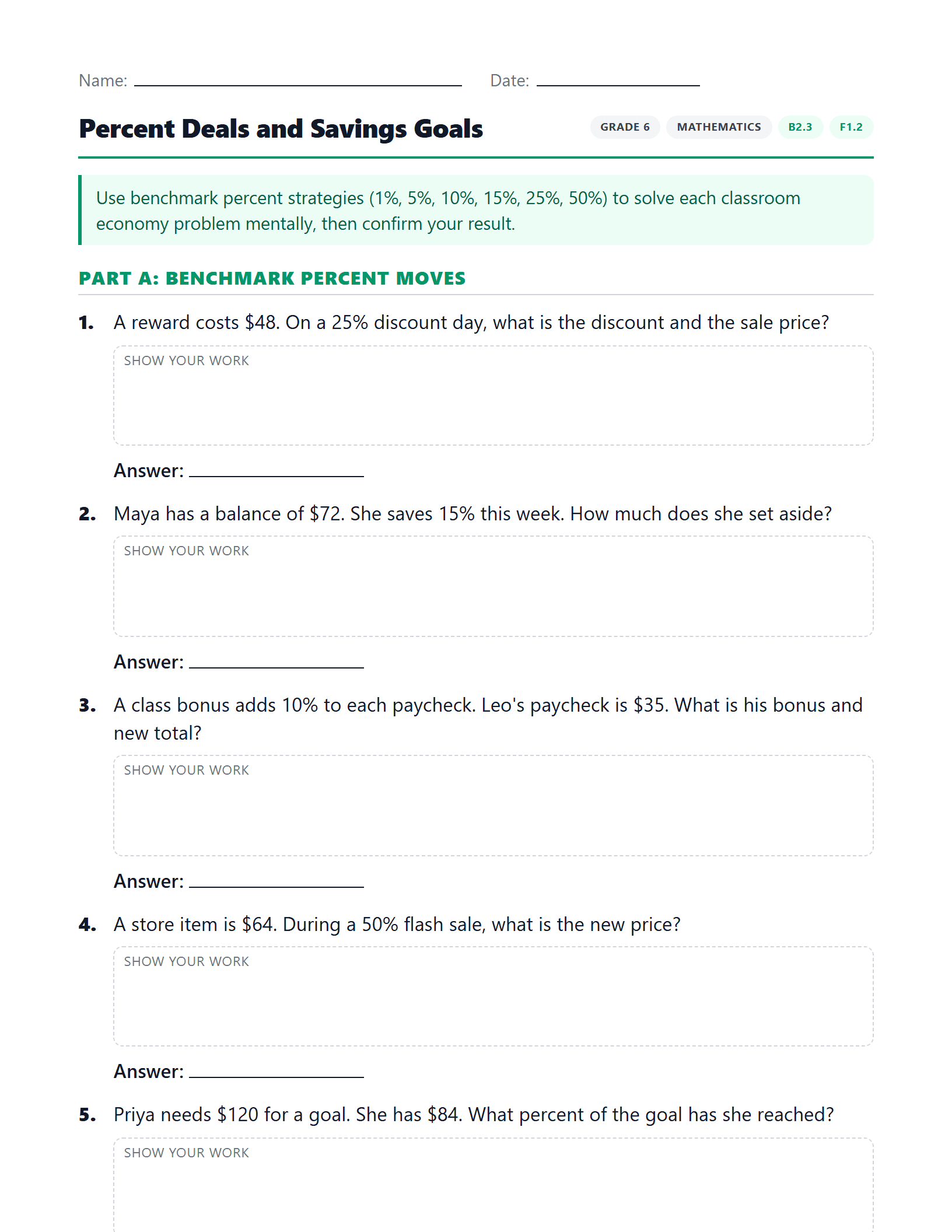
Percent Deals and Savings Goals
Use mental math with benchmark percents to calculate discounts, bonuses, and realistic savings-goal steps.
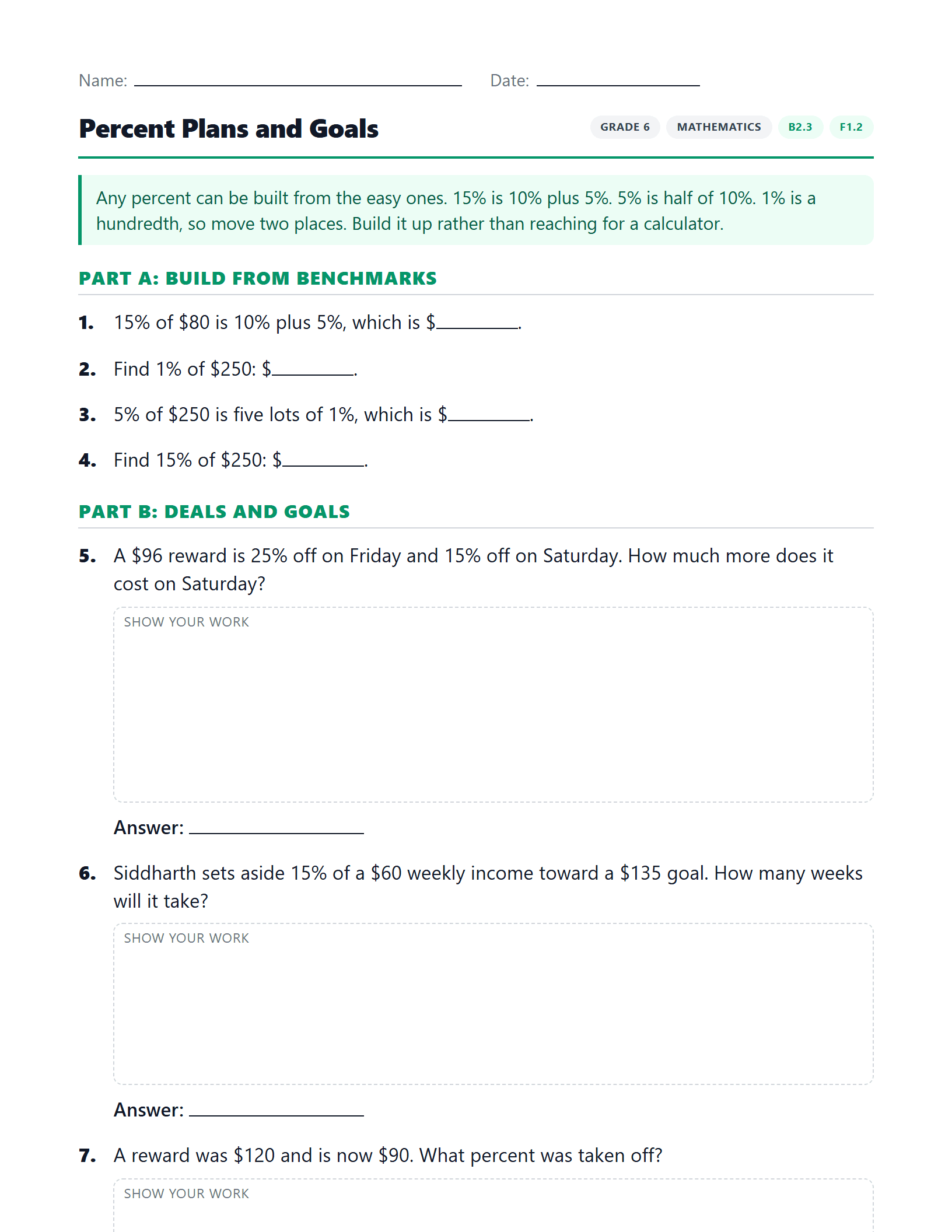
Percent Plans and Goals
Build awkward percents out of easy ones, compare two discount days, and work out what percent a price drop really was.
Want the teaching ideas behind these sheets?
See how each Grade 6 expectation connects to your classroom economy, with activity ideas for every one.